

Most roofing decisions start the same way. Something goes wrong — a leak, a visible rust patch, a gutter pulling away from the fascia — and someone picks up the phone.
From that point, the experience of working with a roofing company in Auckland varies more than most homeowners expect. The gap between a straightforward job that runs on time and ends with a roof that performs for thirty years, and one that drags, produces surprises on the final invoice, and raises doubts six months later — that gap is almost entirely about who you chose to call.
This is what a well-run roofing project actually looks like, from first contact to finished job. Knowing what to expect makes it easier to identify when something is going wrong early enough to do something about it.
The First Call — What Should Happen
A roofing company worth using asks questions before it offers a price.
What’s the roof profile? What material is currently on it? How old is it? What’s the problem — a single leak point or general deterioration? Has it been repaired before, and if so, where? Is the property coastal? Is there asbestos-containing material on the roof that needs testing before work begins?
These aren’t complicated questions. But a company that skips them and moves straight to quoting is either pricing a job it doesn’t fully understand or applying a standard rate to a non-standard situation. Neither is good for the client.
A site visit should follow for any job beyond a minor repair. Photographs don’t tell a roofer what walking a roof tells them. The condition of the battens beneath the cladding, the state of the flashings around penetrations, whether the existing structure has any movement — these are things that change the scope and cost of a job and can’t be assessed from the driveway.
The Quote — What It Should Cover
A quote is a communication document, not just a number.
A well-structured quote from a quality Auckland roofing company names the product being installed — manufacturer, product grade, colour, warranty period. It specifies what’s included: removal and disposal of existing material, replacement of any damaged battens or sarking, flashing work, ridge and barge cappings, spouting if applicable. It states the workmanship warranty period separately from the product warranty.
What it shouldn’t do is leave significant costs unspecified pending the job starting. Phrases like “additional work as required” or “batten replacement if needed” without a rate or cap attached are the mechanism by which jobs end up costing significantly more than quoted. Ask upfront what the rate for additional work is, and under what circumstances it would be incurred.
Getting multiple quotes is sensible. Comparing them requires reading them with the same level of scrutiny. A cheaper quote that specifies a lower-grade product, excludes flashing work, or carries no workmanship warranty isn’t cheaper — it’s deferred cost.
The Installation — What to Watch For
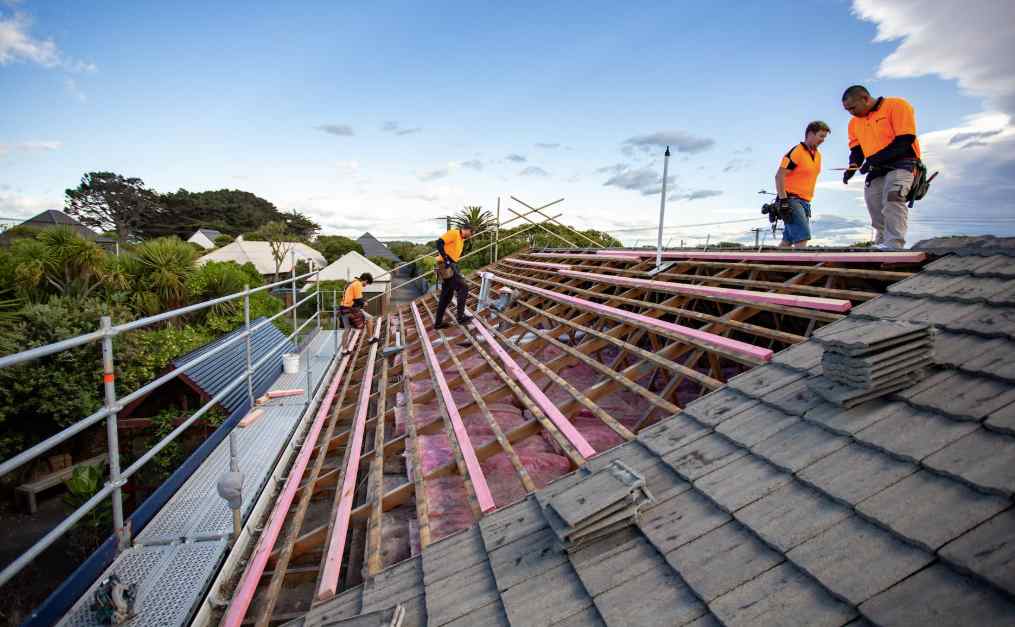
A professional roofing crew is not particularly visible during installation. They arrive, they work, they clean up. The job progresses at a pace that reflects its actual complexity — not rushed to fit a schedule, not padded to justify the invoice.
What you should see: materials delivered and stored properly before installation begins, not dumped anywhere convenient. Old material removed and disposed of promptly rather than sitting on the lawn for a week. Flashings and under-flashings installed at the correct stages, rather than improvised or omitted, not retrofitted afterward.
What you shouldn’t see: anyone working on the roof without appropriate edge protection. New cladding being laid before old material is fully removed from the section being worked. Any indication that the crew isn’t the same team the roofing company sent to quote.
Subcontracting is common in the industry and not inherently problematic — large companies use subbies for overflow work. But the installation team should be briefed on the specific job, familiar with the products being installed, and working to the same standard the quote represented. If the crew that shows up appears unfamiliar with the site or the specification, that’s worth raising with the company directly.
After the Job — What Good Looks Like
The roof goes on. The crew leaves. A few things should happen before the job is fully closed.
A walkthrough — either physical or via photographs — should confirm the work is complete to specification. Flashings properly formed and sealed. Ridge capping continuous. Spouting re-hung at correct fall. Any penetrations properly detailed. This is the moment to identify anything that doesn’t look right, while the crew is still contactable and the job is fresh.
Documentation should follow: the product warranty registration if applicable, the workmanship warranty in writing, and a record of the specific product installed. This last point matters more than most homeowners realise. When a warranty question arises in year eight — a coating failure, a colour change, a performance issue — knowing exactly what product and grade is on the roof determines whether the claim is valid.
A roofing company that disappears after the cheque clears is telling you something. A good Auckland roofing company is easy to contact for post-completion questions, has a clear process for warranty work, and treats the relationship as ongoing rather than transactional.
Frequently Asked Questions
How long should a full re-roof in Auckland take? Most residential re-roofs complete in two to five days depending on roof size, pitch complexity, and weather. Larger or more complex jobs take longer. A one-day turnaround on a standard three-bedroom home should prompt careful questions about crew size, scope and process.
Should I be home during the roofing installation? Not necessarily, but being reachable is important. Questions arise during installation — unexpected batten damage, a flashing detail that needs a decision — and being contactable means these get resolved correctly rather than being guessed at.
What’s the difference between a product warranty and a workmanship warranty? A product warranty covers failure of the roofing material itself — coating delamination, perforation from corrosion. A workmanship warranty covers the installation — a leak that results from incorrect flashing detail, inadequate fastening, or a lap that wasn’t properly sealed. Both matter. A product that fails gets replaced by the manufacturer. An installation that leaks is the roofing company’s responsibility.
Can I stay in the house during a re-roof? Generally yes, though it’s noisy. Some homeowners prefer to be out during peak hours. There’s no safety reason to vacate unless the job involves asbestos removal, which may require specific controls and a licensed removal contractor depending on the material and scope.
How do I find a reputable roofing company in Auckland? Licensed Building Practitioner registration is verifiable through the MBIE register. RANZ membership is a meaningful industry standard indicator. References from completed jobs in similar conditions to your property — particularly coastal if relevant — are worth asking for. A company that’s been operating under the same name in Auckland for decades has a track record that a recently formed operation doesn’t.
The Job That Runs Like It Should
A roofing project that goes well is unremarkable. The crew arrives when they said they would. The work progresses at a sensible pace. The finished product looks right, performs right, and comes with documentation that means something.
That’s the standard a good roofing company holds itself to without being asked. The homeowners who’ve had the other experience know exactly how much the difference matters.